Repetitive the nervous system.
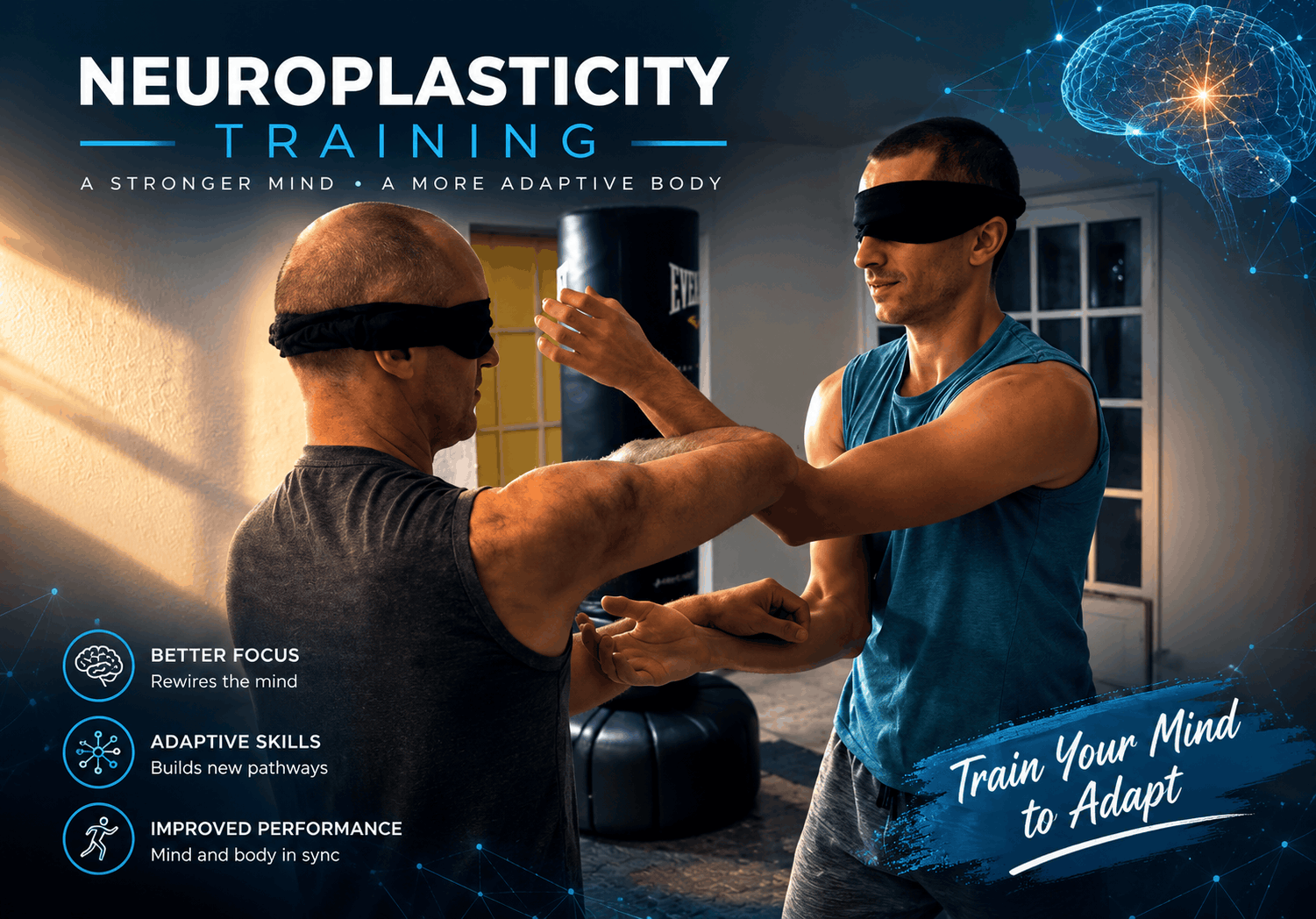
Neuroplasticity is one of the most important properties of the human nervous system: its capacity to modify its organisation and functioning in response to learning, experience , movement and the demands of the environment. This capacity persists throughout life , although it is influenced by age , health status, sleep quality, training intensity and individualcharacteristics.
In this context, Ving Tsun, as a traditional close-rang e combat system, offers a set of repetitive , progressive and coordinative ly demanding exercises that can be studied in the light of motor learning and neuropl asticity. The practice of the forms, the alternation of upper-limb movements, postural organisation, control of the centre line , adaptation to contact and responses to external stimuli make it possible to work on different components of the relationship be tween the nervous system and movement.
This article proposes an originalapproach to the use of Ving Tsun exercises as a resource for health promotion, the prevention of functional decline and complementary support for rehabilitation processes, always with individualadaptations and respect for clinical limits.
It does not claim that Ving Tsun cures neurological diseases; rather, it analyses how certain principles of its training may contribute to relevant functional goals.
Note: Full access to this article requires registration on the platform.